


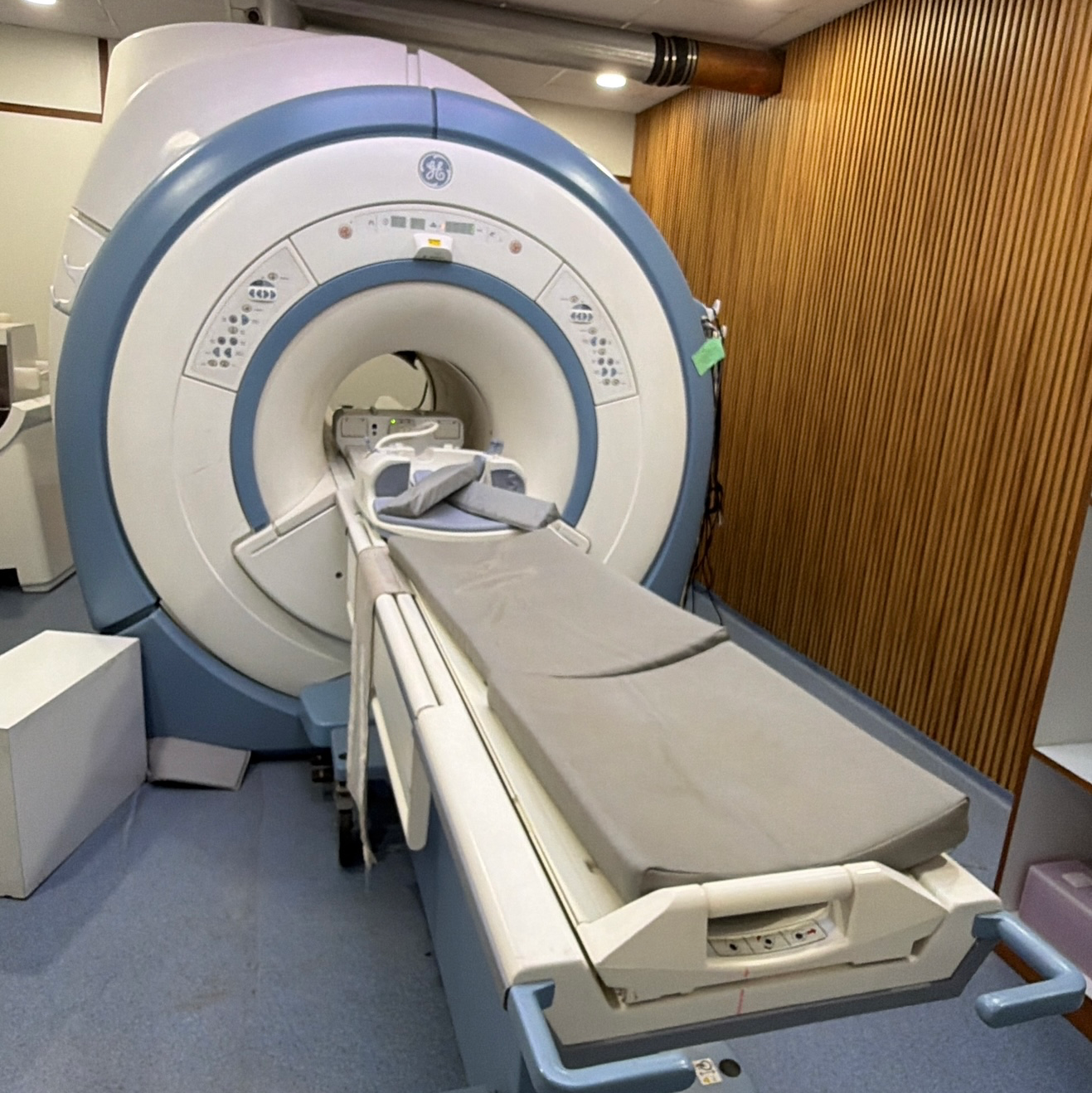
Closed-Bore MRI: The Standard Option
A closed-bore MRI is the most traditional MRI option. It also has the most powerful field magnetic strength. One of the distinctions between a closed MRI and an open MRI lies in the size of the opening where the patient is positioned.
Image Quality:
Closed MRI systems typically have magnet strengths ranging from 1.5 to 3.0 Tesla. These strong magnetic fields enable rapid scanning and high-quality images. The shape of the closed MRI allows for detailed images of areas that other systems have difficulty scanning.
Cost Considerations:
Closed bore MRIs are generally the most expensive option in terms of purchase price, installation, and maintenance. However, they typically offer the most advanced imaging capabilities.
Wide-Bore MRI: The Most Comfortable:
There has been a push among manufacturers to continue bringing high image clarity while widening the bore for patients who can't fit in a 60 cm opening or cannot convince themselves to be placed in that opening.
Several manufacturers have responded by introducing “wide-bore” systems into this higher-field magnet category. While these systems don’t create a wider field of view, they do create a more comfortable atmosphere for the patient.
Image Quality:
Wide MRI machines combine the spaciousness found in open MRI systems and the high-quality imaging capabilities of closed MRI machines. While the images may not reach the level of detail that a closed MRI can achieve, they are still superior to an open MRI.
Cost Considerations:
While wide-bore MRIs tend to cost more than open systems, they provide a solid middle ground between affordability and imaging power. Maintenance and service pricing is similar to closed bore systems, but with added flexibility for patient comfort.
Open MRI: Ultimate Comfort & Specific Scans
Open MRI machines have two flat magnets positioned over and under the patient. This is one of its most important features. The extra space increases patient comfort and provides an unobstructed view of the scanning area, rendering them well-suited for specific types of scans, such as brain scans.
Among these systems are generally .2T and .3T magnets with a few systems as high as .7 or even 1.0T
Image Quality:
Although the open MRI provides flexibility and ample space, its magnetic field strength is significantly lower. This, along with its design, poses challenges in generating high-quality images. Due to these limitations, open MRI systems may not always be suitable for certain diagnostic needs.
Cost Considerations:
Open MRI systems are typically priced lower than closed or wide bore systems. This is due to both reduced imaging complexity and lower ongoing maintenance costs. Their simplicity and accessibility often make them a more budget-friendly option—especially for facilities serving a broader patient base.